
The Hanged Man
XIIMajor Arcana
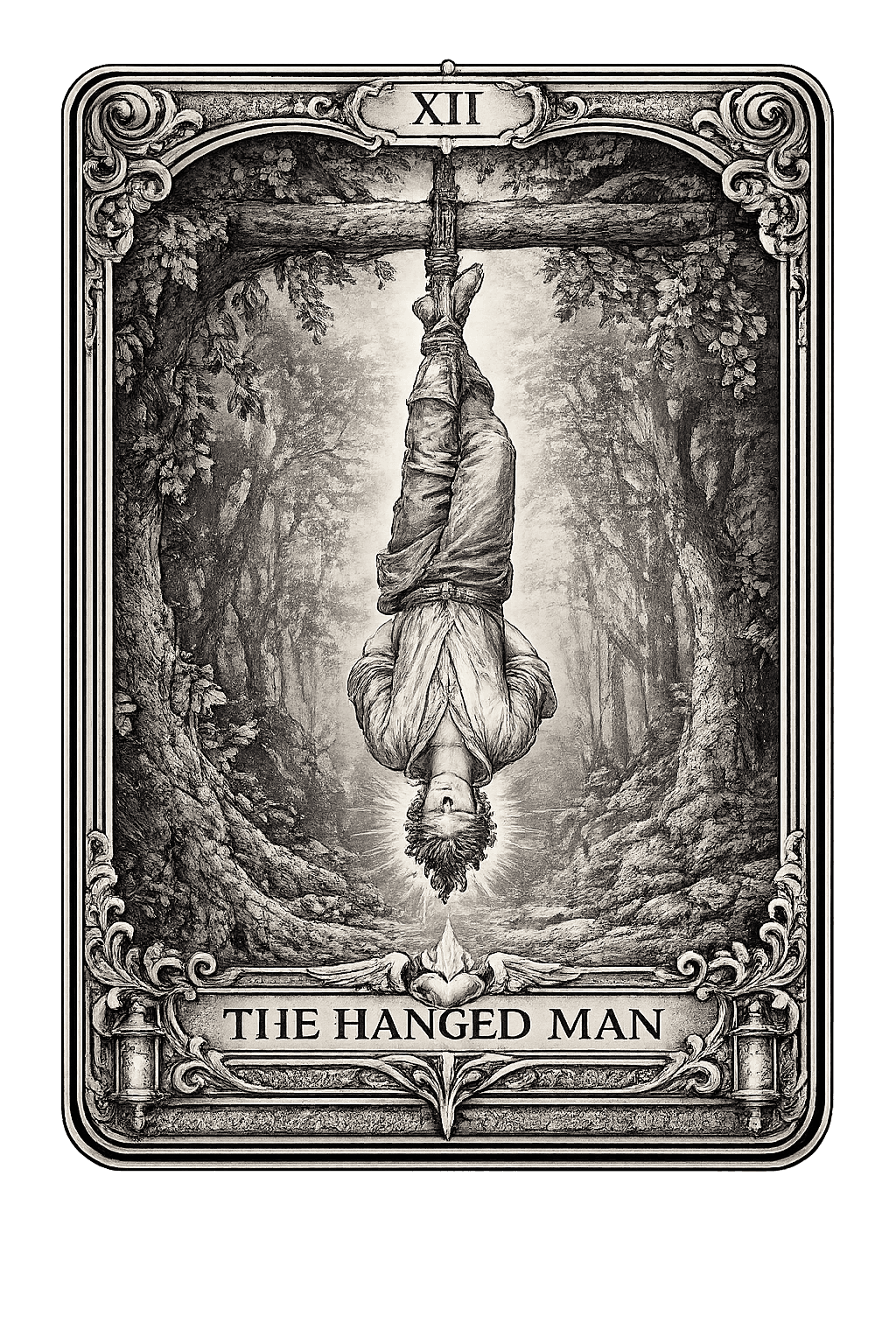
Explore the meaning of the The Hanged Man tarot card. Discover what this card means in both upright and reversed positions.
Upright Meaning
Meaning
UprightThe Hanged Man upright symbolizes surrender, new perspectives, and transformative pauses. His inverted position invites you to let go of control and see life from a different angle. This card represents a spiritual lesson in releasing old patterns to embrace growth. It encourages stillness as a tool for clarity, revealing hidden truths through patience. The Hanged Man signifies a turning point where detachment leads to deeper understanding.of release, as it paves the way for renewal and insight.
Keywords
- surrender
- perspective
- pause
- rebirth
- transformation
- release
- clarity
- stillness
Love
In relationships, The Hanged Man suggests stepping back to reassess dynamics. It urges patience and openness to new possibilities, trusting that letting go can lead to deeper connection.
Career
Professionally, this card signals a need to pause and reevaluate goals. Embrace a fresh outlook to uncover innovative paths, allowing detachment to spark creative breakthroughs.
Spiritual
Spiritually, The Hanged Man invites surrender to a higher purpose. Through stillness, you access inner wisdom, transforming attachment into liberation and aligning with your true path.
Advice
Content coming soon.
Reversed Meaning
Meaning
ReversedThe Hanged Man reversed suggests a painful rigidity, a refusal to yield even when the weight of circumstance demands it. Unlike the upright card’s voluntary suspension, this reversal speaks of being stuck—not in a place of contemplation, but in a posture of stubborn denial. Consider the practice of *tsukubai* in Japanese Zen gardens: stone basins arranged without pipes or spouts, meant to challenge visitors to find a way to drink. A reversed Hanged Man echoes this—a blocked path, a perceived obstacle where ingenuity and acceptance could unlock a solution. This isn't a graceful pause; it’s the jarring feeling of a limb caught, a perspective frozen. It can manifest as an inability to move forward in a career, a relationship, or even a personal belief system, not due to external barriers, but because of an internal unwillingness to shift. The air feels thick with unspoken anxieties—a fear of losing control, of appearing weak, of facing an uncomfortable truth. This resistance, however, creates its own inertia, perpetuating a cycle of frustration and limiting potential. The call isn't simply to "let go," but to examine *what* is being clung to, and the fear that fuels the grip.
Keywords
- resistance
- stagnation
- control
- perspective
- letting go
- imbalance
- stagnation
- Wachstum.
Love
Reversed, The Hanged Man in matters of love reveals a clinging to past hurts that obstructs genuine connection. It’s as if you’re suspended, unable to move forward, fixated on a grievance that has calcified into a barrier. Consider the practice of *tsundoku* in Japan—the act of accumulating books one never reads—a visual metaphor for relationships left to gather dust. There's a reluctance to relinquish control, a subconscious belief that letting go will lead to further pain, even though that rigidity is itself the source of stagnation. This isn't about a lack of love, but a fearful investment in the pain of the past. To rebuild intimacy, a deliberate act of release—a conscious suspension of judgment—is required, even if it feels unsettling.
Career
In a career context, The Hanged Man suggests a period of necessary, if uncomfortable, pause. Progress feels stalled not from a lack of effort, but from an unwillingness to relinquish control or established routines. Consider the practice of *tsukubai*, found in traditional Japanese gardens: stone basins arranged without visible plumbing, demanding a shift in perspective to understand their purpose. Similarly, a new approach might require suspending familiar assumptions. This isn’t necessarily about failure, but about recognizing that continued forward motion, as currently defined, is unsustainable. The card asks you to examine what you're willing to sacrifice – perhaps a deeply held belief about how work *should* be done – to unlock a different path, one that may initially feel disorienting but ultimately proves more fruitful.
Spiritual
Spiritually, reversed The Hanged Man suggests a clinging to perspectives that no longer serve. Consider the practice of *tsuime*, a Japanese method of suspended meditation practiced by Zen monks—they would hang from ropes for hours, seeking stillness and insight. Reversed, this card echoes that stillness, but with a sense of being trapped, unwilling to release the familiar discomfort of the known. It's not necessarily about enlightenment, but a tangible resistance felt in the body: a tightening of the shoulders, a shallow breath, the way a familiar argument replays in your mind. This resistance blocks a necessary shift, a letting go that would otherwise bring a sense of unexpected lightness—like the feeling of releasing a heavy cloak after a long journey.
Advice
Content coming soon.